
Introduction: A Junior Engineer’s Life at Sea
Life at sea is mysterious, adventurous, and challenging. But the heart of every ship beats inside its engine room, where marine engineers keep everything running smoothly. For a Junior Engineer, the entry-level rank in the engine department, a day in the life marine engineer is packed with learning, tough jobs, and unique experiences. This account is based on the real-life daily routine of a Junior Engineer on a bulk carrier.
Morning Routine – Starting the Day in the Engine Room
The Junior Engineer’s day usually begins at 6:00 AM with a quick breakfast before heading to the engine control room (ECR). A morning briefing with the Second Engineer sets the agenda for the day.
The Junior Engineer assists in morning engine room rounds, where duties include checking:
- Main engine lube oil pressure
- Cylinder exhaust temperatures
- Generator load distribution
- Boiler water levels
- Refrigeration plants and compressors
This early shift gives a young marine engineer firsthand insight into the heartbeat of the ship. Every detail matters and must be logged carefully.
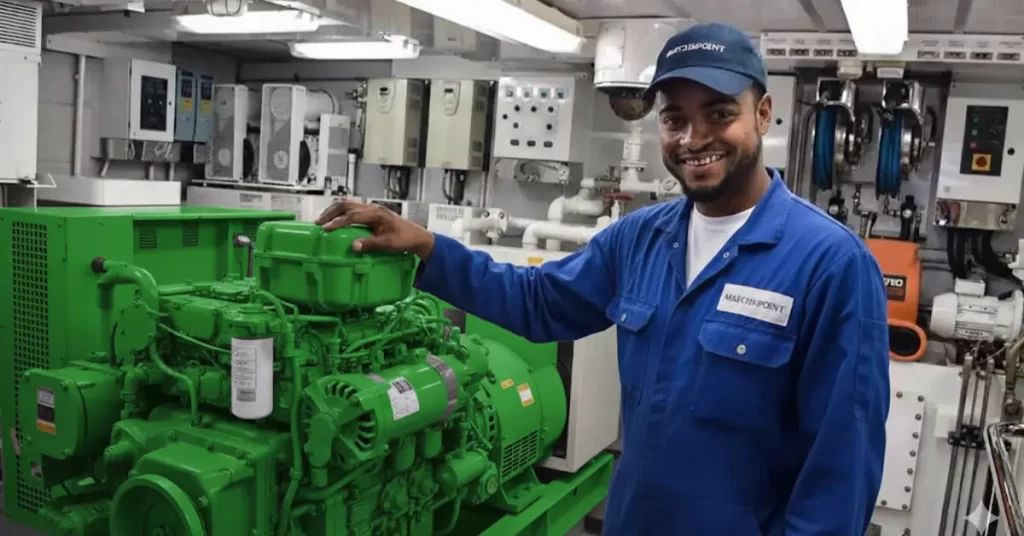
Maintenance Tasks – Learning Through Hands-On Work
After morning rounds, the Junior Engineer’s real work begins – maintenance jobs. According to the ship’s Planned Maintenance System, tasks vary daily.
One of the most common jobs is overhauling the fuel oil purifier. The JE helps in:
- Isolating and draining the purifier
- Opening and cleaning the separator bowl
- Inspecting filters and sealing rings
- Reassembling under supervision
Such tasks are sweaty, physically demanding, and critical for ship safety. This phase of a day in the life marine engineer is all about learning the ropes from senior engineers.
Lunch Break and Team Bonding
By noon, everyone takes a break. Lunch at sea usually consists of rice, curry, vegetables, and sometimes regional dishes prepared by the crew. For a Junior Engineer, this is also time to interact with colleagues, share stories, and absorb informal lessons from the Chief Engineer.
Afternoon Work – Repairs and Documentation
Post-lunch sessions are for repairs and troubleshooting. On this particular day, the Junior Engineer assists the 4th Engineer with cleaning the air compressor suction filter, helping resolve irregular system cycles.
Later in the afternoon, the JE updates logbooks in the engine control room. Recording data is essential, because these logs give the Chief Engineer insights into machinery health. Documentation is as important as hands-on work for a marine engineer’s growth.
Evening Rounds – Ensuring the Ship Runs Smoothly
At 5:00 PM, evening machinery rounds are carried out. Junior Engineers check the sewage treatment plant, fresh water generator, and hydraulic systems.
If the ship is entering or leaving port, evenings can be even busier, requiring constant monitoring of boilers or standby generators. This is a key highlight of a day in the life marine engineer—adaptability to changing ship conditions.
Dinner and Extra Duties
For many on board, dinner signals the end of the day. But as a Junior Engineer, evenings often involve overtime: topping up engines with lube oil, assisting in fuel transfers, or monitoring cargo-related machinery. Work may extend until 9:00 or 10:00 PM depending on operations.
After a quick shower, personal time is minimal. The JE often writes notes on the day’s work, studies manuals, or occasionally calls home if internet access allows. Mental endurance is just as important as technical skills at sea.
Challenges of a Junior Engineer’s Life
A Junior Engineer’s journey is far from easy. The main challenges include:
- Isolation: Months away from family require mental strength.
- Responsibility: Even small tasks carry big consequences for ship safety.
- Steep Learning Curve: The JE is constantly learning about pumps, generators, automation, and more.
This balance of responsibility, learning, and endurance is what defines a day in the life marine engineer.
Lessons and Rewards of Life at Sea
Despite the difficulties, being a marine engineer at sea is uniquely rewarding. Each day teaches resilience, teamwork, and technical confidence. Watching the sunset on deck after a long shift makes the struggles worthwhile.
For a Junior Engineer, today’s oily gloves and heavy spares are tomorrow’s leadership and decision-making skills. Every day contributes to the transformation from trainee to expert.
Conclusion: The Real Meaning of a Marine Engineer’s Day
A day in the life marine engineer is not glamorous, but it is fulfilling. It’s about responsibility, teamwork, and growth while facing unique challenges in the middle of the ocean.
For those who choose this path, being a Junior Engineer offers not just a career, but a lifestyle—one that builds character, discipline, and pride in keeping the world’s ships moving.
