
Why the Marine Industry is Rethinking Fuel in 2025
Alternative Marine Fuels are rapidly revolutionizing the global shipping industry, offering eco-friendly solutions to meet strict decarbonization targets in 2025 and beyond. As maritime companies and engineers seek safer, cleaner options, a surge in methanol, ammonia, biofuels, and LNG adoption is reshaping vessel operations and future investments. The transition to alternative marine fuels is driven by new IMO regulations, technological advancements, and sustainability pressures. In this post, we uncover the latest trends, statistics, and expert insights helping shipowners, operators, and technical teams navigate challenges—and succeed—in the dynamic world of greener shipping.
The Fuel Revolution: What’s Really New and Unique?
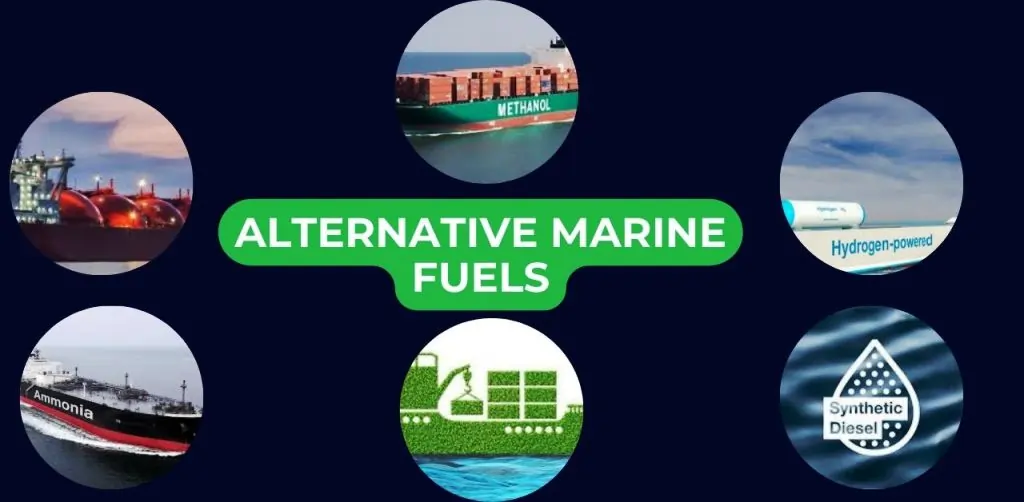
1. Green Hydrogen
- What’s Unique: Produced purely from renewable electricity; industrial-scale pilot vessels are now operational.
- Hot in 2025: Green hydrogen projects are seeing investments from leading Asian and European ports. New onboard cryogenic storage systems promise higher safety and efficiency.shipfinex
- Engineer’s Insight: Watch for hybrid fuel cell setups—combining batteries and hydrogen cells for instant clean power even in emission-control areas.
2. Ammonia
- What’s Unique: Carbon-free when produced renewably; advanced engine coatings and alloys allow safe operation in corrosive environments.yachts.peninsula360
- Hot in 2025: Multi-million dollar pilot routes, established safety protocols, and IMO testbeds make ammonia a true contender.
- Expert Tip: Ammonia’s toxicity is manageable with smart sensor systems and crew training, making adoption realistic for deep-sea vessels.
3. Advanced Biofuels (HVO, FAME)
- What’s Unique: Hydrotreated Vegetable Oil (HVO) delivers up to 90% lower CO₂ and requires no major engine mods, making it instantly usable by most fleets.yachts.peninsula360
- Hot in 2025: ISO standards now support 100% biofuel blends for marine use. Traceable supply chains and feedstock innovation (waste oils, algae, etc.) secure long-term sustainability.britanniapandi
- Engineer’s Insight: Second-generation biofuels ensure high cetane numbers and stable ignition, even at low temperatures.
4. Methanol
- What’s Unique: Fastest growing alternative—major lines are retrofitting and ordering dual-fuel methanol vessels at record pace.
- Hot in 2025: Methanol bunkering infrastructure is expanding globally; e-methanol offers a nearly zero well-to-wake emission profile.
- Technical Highlight: Methanol’s combustion is clean and engines require only minimal adaptation. Fuel risk management is simple compared to hydrogen or ammonia.
5. LNG & LPG
- What’s Unique: Huge drop-in adoption due to existing infrastructure. Addressing methane slip with new engine designs and onboard scrubbers.
- Hot in 2025: Dual-fuel engine deliveries booming in Asia; Singapore’s LNG bunkering quadrupled year-on-year.britanniapandi
- Engineer’s Insight: Transitional fuel for fleets not ready for zero-carbon—LNG/LPG is the pragmatic stepping stone.
6. Hybrid Solutions
- What’s Unique: Mixing batteries with alternative fuels for peak shaving and emission control zone compliance.
- Hot in 2025: Hybrid electric-LNG and hydrogen setups now specified on new vessels; custom power management systems optimize every voyage.shipfinex
Infographic Table: Quick Comparison of 2025 Marine Fuels
| Fuel Type | CO₂ Reduction | Tech Maturity | Infrastructure | Compatibility | Special Trends |
|---|---|---|---|---|---|
| Green H₂ | 100% | Pilot phase | Growing | New builds | Hybrid setups, green corridors |
| Ammonia | 100% | Pilot phase | Early-stage | Retrofit | Safety innovations, alloy tech |
| Biofuels | Up to 90% | Mature | Broadening | Drop-in | HVO/FAME standards, sustainable sources |
| Methanol | Up to 90% | Mature | Expanding | Retrofit/dual | Dual-fuel surge, e-methanol |
| LNG/LPG | 25-35% | Mature | Extensive | Dual-fuel | Methane slip tech, retrofits |
| Hybrid | Up to 95% | Emerging | Custom | Retrofit/new | Battery integration, ZEZ compliance |
Latest Trends & Innovations
- Green Shipping Corridors: Dedicated zero-emission trade routes—Singapore to Rotterdam, LA to Shanghai—now trial real-time bunkering and refuelling infrastructure.dnv
- Smart Bunkering: AI-powered bunkering management, with digital twin models predicting optimal refuelling schedules.
- Crew Training: Simulators for ammonia and hydrogen handling; accredited courses mitigate toxicity hazards.
- Regulatory Advances: EU “FuelEU Maritime” scheme requires emission intensity cuts for all large vessels docking at European ports.
Practical Tips for Marine Engineers
- Risk Management: Always check blend ratios and certifications for biofuels—traceability is now part of statutory audits.
- Fleet Planning: Dual-fuel engine retrofits offer future-proof flexibility. Prioritize routes with bunkering capacity for your chosen fuel.
- Innovation Watchlist: Seek suppliers with proven safety solutions for toxic and cryogenic fuels—smart monitoring equals safer operations.
Key Data Points & Trends
- Sustainable Marine Fuel Market Size
- Global sustainable marine fuel market valued at USD 19.9 billion in 2025
- Projected to reach USD 730.1 billion by 2034, at an astonishing CAGR of 49.2%dimensionmarketresearch
- North America holds 54.5% market share in 2025, driven by strong regulations and rapid clean fuel infrastructure investmentdimensionmarketresearch
- Alternative Fuel Vessel Orders & Fleet Adoption
- 151 alternative-fuelled vessels ordered in the first half of 2025
- 19.8 million gross tonnes (GT) ordered in Jan-Jun 2025—a 78% year-on-year increase (mostly container ships, but strong gains in bulkers, tankers, and RoPax segments)dnv
- Fuel choices diversifying: Methanol and ammonia now top alternatives for new builds following rapid dual-fuel engine adoptiondnv
- Marine Fuel Market Outlook
- Overall marine fuel market size in 2025: USD 140.6 billion; projected to reach USD 171.5 billion by 2030 (CAGR 4%)researchandmarkets
- Marine fuel optimization tech segment: USD 13.69 billion in 2025thebusinessresearchcompany
- Regional Growth
- Japan’s sustainable marine fuel market: USD 620 million in 2025, growing to USD 51.1 billion by 2034 (CAGR 47.0%)dimensionmarketresearch
- Europe is the fastest-growing region for sustainable marine fuels, fueled by the EU Green Deal and Fit for 55 programdimensionmarketresearch
- Regulations & Adoption Targets
- IMO’s Net-Zero Framework (2025): Binding regulation requiring at least 20% emission reductions by 2030 and 70% by 2040—with mandatory uptake of alternative fuelsimo+2
- Entry into force: October 2025 (mandatory for large vessels, affecting 85% of total international shipping emissions)imo
- Shipowners must cut GHG intensity by 30% by 2035 and 65% by 2040reuters
- Fuel Share & Technology Advances
- LNG remains strong as a transitional fuel in Asia; methanol and ammonia are growing rapidly worldwide in new orders and infrastructure upgradesbritanniapandi+1
- Hybrid fuel systems and advanced biofuels (HVO/FAME) see increased deployment on newly retrofitted or built vesselsdnv+1
- Methanol bunkering infrastructure expanding globally, supporting surge in vessel ordersdnv
- Lifecycle emission analysis now key factor in fuel selection and regulatory compliancedimensionmarketresearch
Quick Reference Table: 2025 Marine Fuel Market & Adoption
| Segment | Value in 2025 | Growth Trend | Key Factors |
|---|---|---|---|
| Sustainable Marine Fuels | $19.9B | CAGR 49.2% to $730.1B by 2034 | North America leads |
| Alt-Fuel Vessel Orders (GT) | 19.8M GT | 78% YoY increase, H1 2025 | Container, bulk, RoPax |
| LNG Market Share | Major in Asia | Strong demand, steady infrastructure | Asia Pacific growth |
| Methanol/Ammonia Adoption | Rapidly rising | Top alt-fuels for newbuilds | Global investments |
| Marine Fuel Market Total | $140.6B | CAGR 4% to $171.5B by 2030 | Tech upgrades, decarb |
| IMO Regulatory Requirement | 20% reduction | By 2030 (Net-Zero Framework) | Mandatory, Oct 2025 |
| EU/Asia Incentives | Strong growth | Bunkering infrastructure, green corridors | Rapid investments |
Sources:
- Dimension Market Research: Sustainable Marine Fuel Market Sizedimensionmarketresearch
- DNV: Alternative-fuelled vessel order statisticsdnv
- IMO: Net-Zero Frameworkimo
- UN: IMO Net-Zero Maritime Strategynews.un
- Britannia P&I: Alternative Fuels Updatebritanniapandi
- Industry market and regulation reportsresearchandmarkets+2
Pros and Cons of Top Alternative Marine Fuels (2025)
Here is a clear comparison of the main alternative marine fuels, focused on practical pros and cons for marine engineering, operations, and regulatory compliance.
| Fuel Type | Pros | Cons |
|---|---|---|
| Green Hydrogen | – Zero CO₂ emissions – High energy density – Valuable for meeting IMO targets – Supports hybrid systems | – Costly production (electrolysis) – Complex storage and bunkering – Limited infrastructure – Safety hazards (flammability) |
| Ammonia | – Zero CO₂ emissions – No carbon in fuel – Good for long-haul routes – Compatible with combustion engines | – Toxic and hazardous to crew – Corrosive to metals, requires special materials – Requires new engine tech – Infrastructure still emerging |
| Advanced Biofuels (HVO, FAME) | – Drop-in compatibility (can use existing engines) – Up to 90% lower emissions – Ready supply chains – Rapid adoption | – Feedstock competition with food/agriculture – Sustainability depends on source – Slightly lower energy density than fossil fuels |
| Methanol | – Cleaner combustion – Dual-fuel retrofits possible – Expanding global infrastructure – Easier bunkering compared to H₂ or ammonia | – Still emits CO₂ unless produced “green” – Toxic if ingested or spilled – Lower energy density than LNG/hydrogen |
| LNG/LPG | – Well-established tech and bunkering – Lower SOₓ, NOₓ, and CO₂ emissions than HFO – Smooth adoption for dual-fuel engines | – Not truly zero-carbon (methane slip) – Requires cryogenic tanks – Fossil source mostly – Regulatory phase-out expected longer term |
| Hybrid (Battery + Fuel) | – Near-zero emissions in port/ECAs – Excellent energy efficiency – Ideal for short routes and urban ferries – Quiet operations | – Batteries add weight and cost – Limited range for large ships – Disposal and sourcing of battery materials may be challenging |
Key Challenges in Marine Fuel Transition
- High Upfront Costs:
Investing in dual-fuel or alternative-fuel vessels (hydrogen, ammonia, methanol) requires significant capital. Retrofitting existing fleets is also expensive. - Limited Bunkering Infrastructure:
Global ports lack uniform refueling facilities for new fuels like hydrogen and ammonia, limiting operational flexibility and deployment options—especially on long-haul or less frequented routes. - Regulatory Uncertainty:
IMO, EU, and country-level rules are rapidly evolving. Companies are challenged to plan vessel investments with confidence about future requirements and compliance timelines. - Technology Maturity and Safety:
Many alternative fuels (ammonia, hydrogen) need new engine designs and handling protocols. Safety risks (toxicity, flammability, corrosion) demand additional training and robust risk management. - Fuel Supply & Consistency:
Unpredictability in green fuel production and supply chains (biofuels, e-fuels) creates potential for cost volatility and interruptions, affecting operational planning. - Crew Training & Competency:
Handling and operating vessels using new fuels mandates significant crew retraining, new procedures, and simulator-based education—raising both short-term costs and workload. - Lifecycle Emissions and Traceability:
Regulations increasingly require proof of well-to-wake emissions reductions. Companies must implement digital tools and new auditing practices for compliance. - Global Market Disparities:
Larger companies can invest and lead; smaller operators may struggle to absorb up-front costs, access new fuels, or comply with complex reporting and regulatory burdens.
Summary:
The shift to greener marine fuels is essential but complex, requiring coordinated investments in technology, infrastructure, training, and supply chains—all amid tightening regulations and commercial pressure.
Would you like these challenges organized into a quick reference table or integrated as a section in your blog post?
Expert Quotes
- Emma Mazhari, CEO of Maersk Trading (APPEC Conference, Sep 2025):
“Any new assets we invest in now must be dual-fuel, allowing us the flexibility to ensure we can recover our investments over the long term. We can already observe that when we refuel in Europe, there is a greater availability of low-carbon fuel… so considerable changes are on the horizon.”reuters - Takeshi Hashimoto, CEO, Mitsui O.K. Lines (MOL):
“In the next five to ten years, shipping companies will prioritize emission reductions through established solutions such as LNG and methanol. MOL is actively investigating wind power to support ship propulsion systems.”reuters - Linda Sigrid Hammer, Principal Consultant, Environment Advisory at DNV:
“The around 40 ammonia-capable ships on order put ammonia firmly in the decarbonization race. Across most barriers significant advancements have been made in the last five years, while challenges remain.”dnv
Case Studies
- Maersk’s Methanol Initiative (2025):
Maersk, a global leader in container shipping, has stopped investing in vessels that run on a single fuel and is rapidly expanding its methanol-powered fleet through dual-fuel retrofit projects. By the end of 2025, Maersk aims to operate nearly twenty methanol dual-fuel vessels, showcasing its commitment to rapid commercial and environmental transformation through alternative fuels.britanniapandi+1 - Fleet Management Ltd – Methanol, LNG, and LPG Vessels:
Fleet Management now manages a growing number of vessels powered by alternative fuels such as methanol, LNG, and LPG. Their operations highlight the best-practice adoption of alternative fuels, including advanced on-board fuel risk management and real-time emissions tracking to meet regulatory and customer sustainability demands.fleetship - NetCargo Logistics GmbH – Biofuel Success (Europe, 2025):
NetCargo Logistics switched trucks to synthetic biofuel (HVO100) in response to EU emissions rules and customer sustainability demands. This move cut their CO₂e emissions by 217,350 kg and saved money via fuel discounts. “Our collaboration with C.H. Robinson shows that when companies share a vision for sustainability, real and impactful change is possible.” — Jani Spais, Owner, Net Cargo Logistics GmbH*chrobinson - British Antarctic Survey – HVO on RRS Sir David Attenborough:
In 2025, Crown Oil supplied 1 million litres of Hydrotreated Vegetable Oil (HVO) to power the RRS Sir David Attenborough on its research missions. The switch to HVO is helping the British Antarctic Survey reach its net zero target by 2040, with cleaner fuel supporting operations in extreme environments.crownoil
FAQs: Alternative Marine Fuels (2025)
Q1. Which alternative marine fuel is most feasible for existing ships?
Biofuels (HVO/FAME) and LNG offer quick adoption due to drop-in compatibility and expanding worldwide infrastructure.
Q2. What’s the biggest challenge with green hydrogen?
Storage and bunkering safety are improving fast but remain complex compared to LNG or methanol.
Q3. Will ammonia be a standard fuel by 2030?
Technically feasible; as infrastructure matures and safety advances continue, adoption on new builds is expected to surge after 2028.
Conclusion: Lead the Green Revolution—Start Today
The alternative marine fuels landscape is transforming as never before. Adoption is powered by regulatory shifts, technical breakthroughs, and increased stakeholder collaboration. For marine professionals and engineering teams, staying up-to-date—and choosing wisely—will future-proof both your operations and career.
