Searching for the ultimate Diesel Generator Buying Guide to end frustrating power outages? This guide delivers top Diesel Generator Selection Criteria every factory, ship, hospital, or remote outpost needs. Master these buying principles to keep your operations powered, secure, and efficient. Not all generators deliver results—using the right buying guide ensures you choose for reliability and savings. Discover proven selection criteria based on real-world needs. Get ahead—apply the best advice for uninterrupted power and peace of mind today. Dive in to learn why professionals trust this Diesel Generator Buying Guide for success.
Why Picking the Right DG Set Matters
A poorly chosen DG set can mean:
- Sky-high fuel bills
- Costly downtime
- Painful repairs
- Reduced machine lifespan
Smart selection = reliable backup, lower costs, and peace of mind.
1. Size Your DG Set for YOUR Real Needs
Undersized? Your equipment stalls, operations crash.
Oversized? Money wasted, fuel burned, bigger carbon footprint.
Pro tip:
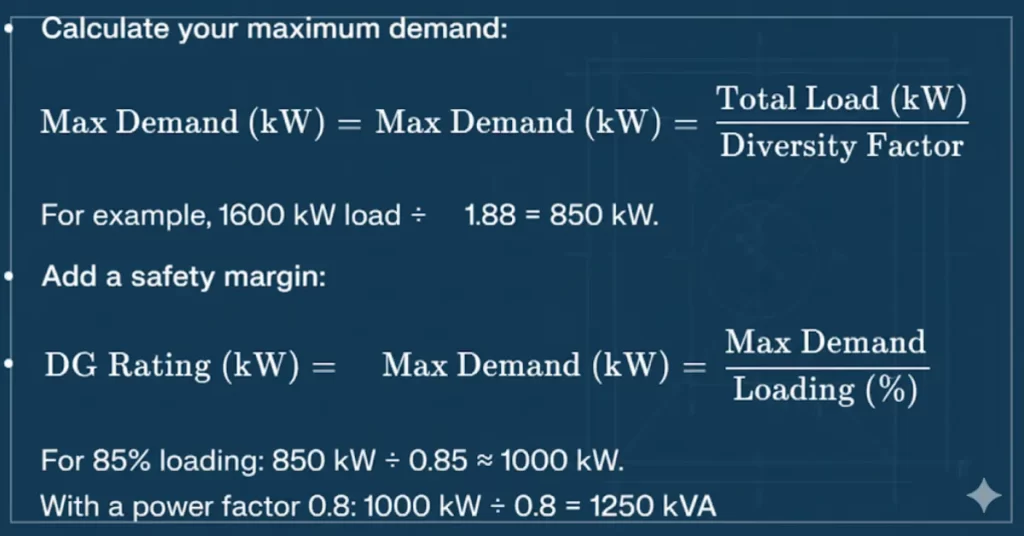
Result: Your DG set is neither starved, nor overfed—just right.
2. Manage Your Load Wisely
Why does loading matter?
- Too much load = generator failure
- Too little = wasted energy, poor efficiency
Expert tips:
- Always include a safety margin for unexpected surges.
- Use load-management systems for variable loads—critical for sites like data centers, hospitals, or factories.
Case Studies:
- Small DG set at a data center? Servers down, lost clients.
- Oversized DG on a small ship? Fuel bill explodes, profit disappears.
3. Choose the Right RPM
RPM = your generator’s heartbeat.
- Low RPM (1500-1800): Quiet operation, best for homes and small businesses, longer life and fuel savings.
- High RPM (3000-3600): More power, essential for industrial sites and critical operations.
Match RPM to your use-case:
- Construction site? Low RPM for steady tools.
- Concert stage? High RPM for big sound and lights.
4. Don’t Overheat – Pick the Right Cooling System
- Air-cooled: Best for hot/dusty conditions, minimal maintenance
- Liquid-cooled: Best for cold climates and heavy-duty operations
Rule: Check your location—choose cooling that matches your environment.
5. Prepare for Mother Nature
Weather and location can wreck a DG set. Protect against:
- Rain/salt air: Use enclosures to block corrosion
- Extreme temps: Insulate, ventilate. Use block heaters for cold.
- High humidity: Add dehumidifiers, keep wiring dry.
- High altitude: Choose turbocharged units for more oxygen.
6. Never Ignore Fuel Quality
Bad fuel = DG downtime, repairs, engine failure.
- Store fuel in sealed, clean tanks
- Use high-quality filtration
- Regularly inspect and test your fuel
Remember: Like a sports car, a generator needs clean, premium fuel to run smoothly.
7. Smart Control and Easy Start is a Must
- Electric, manual, or automatic start: Choose convenience (automatic best for emergencies)
- Invest in reliable control systems—think alarms, dashboard diagnostics, regular checks
8. Drive Type – Tailor to Your Operation
- Mechanical drive: Simple, efficient for constant loads
- Electrical drive: Quiet, flexible for variable demands
Pick what matches your operation’s load variability
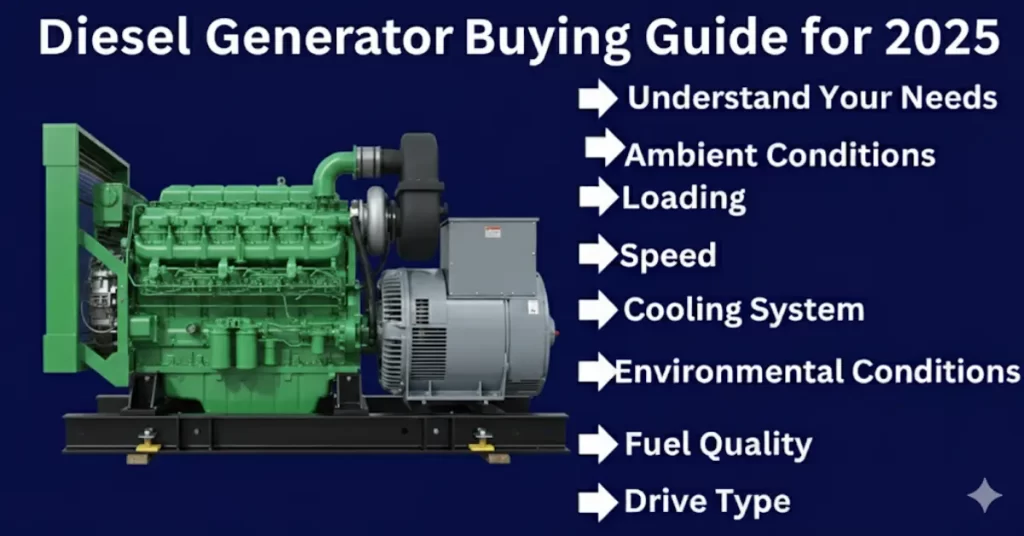
Quick Selection Checklist Table
| Selection Step | Key Point |
|---|---|
| Calculate True Load | List all major & surge loads |
| Add Safety Margin | 10–20% extra capacity |
| Pick RPM | Low = longer life; high = output |
| Cooling System | Match to environment |
| Fuel Quality Plan | Tank, filter, test regularly |
| Start System | Electric/manual/auto for use case |
| Drive Type | Mechanical for steady, electrical for variable |
| Maintenance Support | Brand/service network in your region |
Top Mistakes & Solutions
| Mistake | What Goes Wrong | How to Fix |
|---|---|---|
| Undersizing | Frequent stalling/overload | Recalculate/resize |
| Oversizing | Low load, wasted fuel | Closer rating to demand |
| Ignoring Climate | Corrosion, shorts, downtime | Pick proper enclosure/cooling |
| Poor Fuel | Clogging, fouling | Clean, test, filter fuels |
Diesel Generator Buying Guide Summary
Picking the right diesel generator isn’t just technical—it’s financial and operational survival. Remember to:
- Calculate your load and rating smartly,
- Manage variable loads,
- Choose RPM and cooling for your application,
- Safeguard against weather,
- Insist on top fuel quality,
- Invest in user-friendly control/start systems,
- Match drive to your needs.
Ready to boost your site’s power reliability? Got questions? Drop them in the comments and get expert help. Share this guide with anyone who needs hassle-free power—it’s time to power up smarter!
For more practical DG set tips, subscribe to MarineDiesel.co.in and turn power outages into a thing of the past.
FAQ on ” Diesel Generator Selection Criteria”
Q: How do I choose the right RPM?
A: Low for homes, high for factories.
Q: Why is fuel quality essential for DG sets?
A: Good fuel quality ensures efficient and reliable operation.
Q: Why is it crucial to consider environmental conditions when selecting a diesel generator?
A: Environmental conditions impact performance and longevity; ignoring them can lead to issues.
Q: What’s the key to choosing between air-cooled and liquid-cooled systems?
A: Select based on your environment – air-cooled for heat, liquid-cooled for extreme conditions
