How to Synchronize Generators is essential for engineers and operators aiming to deliver reliable power across demanding environments—whether in marine vessels, industrial facilities, or emergency backup systems. When the demands outgrow a single generator, synchronizing and operating two or more generators in parallel ensures increased power output, system versatility, and enhanced reliability. In this comprehensive 2025 guide, you’ll learn the proven steps, safety protocols, and modern innovations behind generator synchronization. Whether you’re looking for manual procedures, parallel kit solutions, or the latest automation trends, mastering generator synchronization empowers you to efficiently connect and operate multiple power sources for maximum efficiency and redundancy.
Why Parallel Generators?

Connecting two generators in parallel offers several advantages:
•Increased Power Output: Combine the wattage of two generators to power larger appliances or more devices simultaneously.
•Redundancy and Reliability: If one generator fails, the other can continue to supply power, ensuring uninterrupted operation.
•Fuel Efficiency: For lighter loads, you can run just one generator, saving fuel. For heavier loads, both can work together efficiently.
•Flexibility: Use one generator for small tasks or both for demanding applications.
Understanding Generator Paralleling Basics
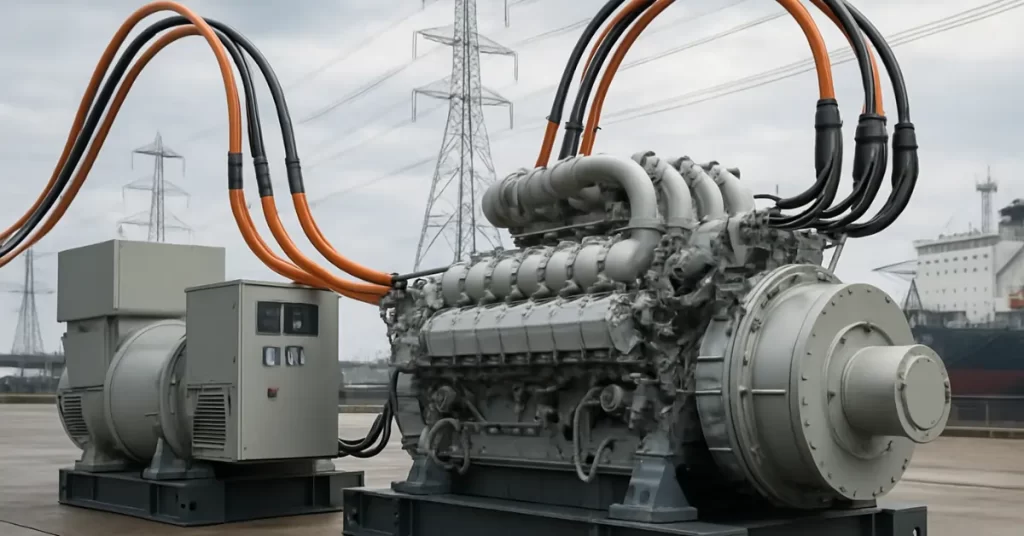
Paralleling generators involves synchronizing their electrical outputs (voltage, frequency, and phase) so they can work together seamlessly. This can be achieved through various methods, each with its own set of requirements and complexities.
Manual Synchronization: The Traditional Approach
Manual synchronization is a fundamental method, particularly relevant for larger, industrial-grade generators or in situations where automated systems are not available. It requires careful attention to detail to ensure the safe and effective paralleling of generators. The core principle is to match the electrical characteristics of the incoming generator with the existing power grid or another running generator.
Steps for Manual Synchronization:
1.Preparation and Warm-up: Begin by starting the incoming generator and allowing it to reach its optimal operating temperature. This ensures stable performance and accurate readings.
2.Voltage Matching: Adjust the voltage of the incoming generator to precisely match the voltage of the bus bar (the common electrical connection point). Use a voltmeter for accurate measurement.
3.Phase Sequence Verification: Crucially, confirm that both the incoming generator and the bus bar have the identical phase sequence. An incorrect phase sequence can lead to severe damage to the equipment. This is often checked using a phase sequence indicator.
4.Fine-Tuning Electrical Parameters: Make precise adjustments to the incoming generator’s speed to achieve the desired frequency, and further fine-tune its voltage to perfectly align with the bus bar.
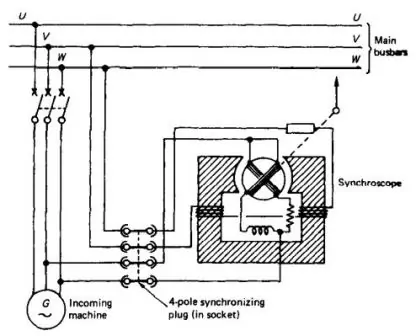
5.Synchronoscope Engagement: Activate the synchronoscope, a specialized instrument that visually indicates the phase difference between the incoming generator and the bus bar. Observe the pointer’s movement.
6.Speed Stabilization: Stabilize the speed of the incoming generator to ensure a consistent and slow rotation of the synchronoscope pointer.
7.Slight Frequency Adjustment: Deliberately set the incoming generator’s speed slightly higher than the loaded machine. This causes the synchronoscope pointer to move slowly in a clockwise direction, indicating that the incoming generator is slightly faster and will eventually catch up.
8.Breaker Engagement at Phase Alignment: The most critical step is to engage the breaker (connect the generator to the bus bar) just before the synchronoscope pointer reaches the 12 o’clock position. This point signifies near-perfect phase alignment, minimizing electrical transients.
9.Operational Decision: Once synchronized, you can decide whether to run both machines in parallel for increased power or to stop one machine if its output is no longer required.
10.Load Sharing and Speed Adjustment: If running in parallel, adjust the speeds of both generators to ensure proper load sharing. Typically, the running machine’s speed is slightly decreased while the incoming machine’s speed is increased to balance the load.
11.Synchronoscope Disengagement: Once stable parallel operation is achieved, the synchronoscope can be turned off.
12.Disconnection (if applicable): If one generator is to be taken offline, its breaker should be tripped after ensuring the load is safely transferred to the remaining generator(s).
While manual synchronization provides a deep understanding of the process, modern systems often employ automated synchronizers for greater precision and safety, especially in critical applications. However, understanding the manual process remains vital for troubleshooting and backup procedures.
Connecting Inverter Generators with Parallel Kits: The Modern Solution
Inverter generators have gained immense popularity due to their clean power output, fuel efficiency, and quiet operation. Many modern inverter generators are designed with paralleling capabilities, allowing users to easily combine their power output using a dedicated parallel kit. This method is significantly simpler and safer than manual synchronization, making it ideal for home use, RVs, and outdoor activities.
Steps for Paralleling Inverter Generators:
1.Choose Compatible Generators: For seamless operation, it is highly recommended to use two inverter generators from the same manufacturer and with similar power ratings. While some brands offer cross-compatibility, using matching units ensures optimal performance and avoids potential issues.
2.Verify Parallel Compatibility: Before purchasing, check the generator’s control panel or specifications for a ‘Parallel Ready’ or ‘Parallel Capable’ designation. This indicates that the generator is designed to work with a parallel kit.
3.Acquire the Correct Parallel Kit: Purchase a parallel kit specifically designed for your generator models from the same manufacturer. These kits typically include specialized cables and connectors that ensure proper electrical connection and synchronization.
4.Secure Connections: Follow the instructions provided in your generator and parallel kit manuals meticulously. Generally, you will connect the grounding wire first (often green), followed by the power cables (typically red and black) to the designated parallel ports on both generators. Ensure all connections are secure and tight.
5.Start-Up Procedure: Once all connections are made, start both generators according to their individual operating instructions. Many parallel-ready generators will automatically synchronize their outputs once started and connected via the kit.
Important Considerations:
•Read the Manuals: Always refer to the user manuals for both your generators and the parallel kit. Specific models may have unique connection sequences or start-up procedures.
•Power Output: When paralleling two identical inverter generators, you can typically expect to nearly double your continuous wattage output, though surge wattage may vary.
•Location: Ensure both generators are placed on a level surface in a well-ventilated area, away from combustible materials, and at a safe distance from living spaces to prevent carbon monoxide buildup.
This method simplifies the process of increasing power output, making it accessible to a wider audience without requiring specialized electrical knowledge. The integrated safety features of parallel kits also minimize the risk of electrical mishaps.
The Lamp Method: A Visual Approach to Synchronization
The lamp method is a traditional and cost-effective technique for visually synchronizing generators, particularly useful when a synchronoscope is unavailable. It relies on observing the flickering or darkness of incandescent lamps connected across the generator and bus bar terminals to determine the phase relationship. While less precise than a synchronoscope, it provides a clear visual indication of synchronization.
Dark Lamp Method:
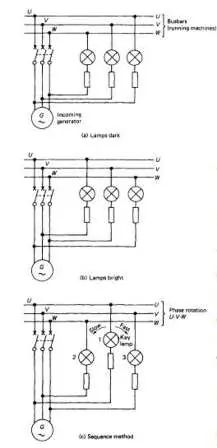
In the dark lamp method, three lamps are connected across corresponding phases of the incoming generator and the bus bar. The goal is for all lamps to be dark, indicating zero potential difference and perfect synchronization.
•Lamp Connection: Connect three lamps, one across each phase, between the incoming generator terminals and the bus bar terminals.
•Working Principle: When the incoming generator and the bus bar are out of phase, the lamps will glow brightly. As the frequencies and phases align, the lamps will dim. Perfect synchronization is indicated when all three lamps are completely dark, signifying that the voltage across them is zero.
•Breaker Engagement: The breaker should be closed when all lamps are dark, or nearly dark, indicating minimal phase difference.
Two Brights and One Dark Lamp Method:
This method is a variation that provides an indication of phase rotation and helps in determining if the incoming machine is running too fast or too slow.
•Lamp Connection: Two lamps are connected across two corresponding phases, and the third lamp is connected across the third phase but with a cross-connection to an adjacent phase on the bus bar. This cross-connection causes one lamp to be dark when the other two are bright at synchronization.
•Working Principle: As the incoming generator approaches synchronization, the lamps will flicker. The sequence of flickering (e.g., bright-dark-bright) indicates the phase relationship. When the incoming generator is in sync, one lamp will be dark, and the other two will be equally bright.
•Speed Adjustment: Observe the flickering pattern. If the lamps brighten and dim in a specific sequence, it indicates whether the incoming generator’s speed needs to be increased or decreased to achieve synchronization.
•Breaker Engagement: Engage the breaker when the designated lamp is dark and the other two are bright, signifying proper phase alignment.
Limitations of the Lamp Method:
•Accuracy: The lamp method is less accurate than a synchronoscope, as it relies on visual estimation. This can lead to slight phase differences during connection, potentially causing minor electrical transients.
•Human Error: The timing of closing the breaker is critical and depends on human reaction time, which can introduce errors.
•Not for All Systems: This method is generally suitable for smaller systems or as a backup, but not for large, critical power systems where precise synchronization is paramount.
Despite its limitations, the lamp method remains a valuable educational tool and a practical solution in situations where advanced synchronization equipment is not available. It underscores the fundamental principles of generator paralleling.
Safety First: Essential Considerations for Paralleling Generators
Regardless of the method used, safety must always be the top priority when connecting and operating generators in parallel. Electrical work carries inherent risks, and improper procedures can lead to serious injury, equipment damage, or even fire. Adhering to safety guidelines and best practices is non-negotiable.
Key Safety Practices:
•Read Manufacturer Manuals: Always consult the owner’s manuals for both your generators and any paralleling equipment. These manuals contain crucial, model-specific safety instructions and operating procedures.
•Proper Ventilation: Generators produce carbon monoxide, a colorless, odorless, and deadly gas. Always operate generators outdoors in a well-ventilated area, far away from windows, doors, and vents to prevent CO buildup in enclosed spaces.
•Grounding: Ensure all generators are properly grounded to prevent electrical shock. Follow the manufacturer’s recommendations for grounding procedures.
•Use Appropriate Cables: Only use heavy-duty, outdoor-rated extension cords and parallel cables that are designed to handle the combined wattage of your generators. Undersized cables can overheat and pose a fire hazard.
•Inspect Equipment: Before each use, inspect generators, cables, and connections for any signs of damage, fraying, or wear. Do not use damaged equipment.
•Turn Off and Disconnect: Always turn off both generators and disconnect all loads before connecting or disconnecting parallel cables. Never attempt to connect or disconnect cables while the generators are running or under load.
•GFCI Protection: Utilize generators with Ground Fault Circuit Interrupter (GFCI) protected outlets, or use external GFCI adapters, especially when operating in wet conditions, to protect against electrical shock.
•Overload Protection: Be mindful of the combined wattage of your paralleled generators and avoid exceeding their maximum output. Overloading can damage the generators and connected appliances.
•Keep Dry: Never operate generators in wet conditions, rain, or snow. Water and electricity are a dangerous combination.
•Fire Safety: Keep a fire extinguisher nearby and ensure there are no flammable materials in the vicinity of the generators.
•Professional Installation (for complex systems): For permanent installations or complex paralleling setups involving home electrical systems, always consult a qualified electrician. Utility regulations and local codes must be strictly followed.
By diligently following these safety guidelines, you can significantly reduce the risks associated with paralleling generators and ensure a safe and reliable power supply.
The Future of Power: Latest Trends and Innovations in Generator Paralleling
The world of power generation is constantly evolving, and generator technology is no exception. Recent advancements are making paralleling generators more efficient, user-friendly, and integrated with modern energy solutions. Understanding these trends can help you make informed decisions about your power needs.
1. IoT Integration and Smart Generators:
One of the most significant trends is the integration of Internet of Things (IoT) technology into generators [1]. This allows for:
•Remote Monitoring and Control: Users can monitor generator performance, fuel levels, and maintenance needs from a smartphone or computer, enabling proactive management and troubleshooting.
•Predictive Maintenance: IoT sensors can detect potential issues before they lead to breakdowns, optimizing maintenance schedules and extending the lifespan of the generators.
•Automated Paralleling: Advanced smart generators can automatically detect the need for additional power and seamlessly bring a second generator online, synchronizing them without manual intervention.
2. Hybrid Systems and Renewable Energy Integration:
There’s a growing trend towards hybrid power systems that combine generators with renewable energy sources like solar panels and battery storage [2]. In such setups, paralleling generators can:
•Provide Backup for Renewables: When solar or wind power is insufficient, generators can kick in to provide the necessary power, often paralleling to meet higher demands.
•Optimize Fuel Consumption: The hybrid system can intelligently manage power flow, using renewable energy when available and only engaging generators when absolutely necessary, leading to significant fuel savings and reduced emissions.
3. Enhanced Parallel Kits and Modular Power Systems:
Manufacturers are continuously improving parallel kits, making them even more user-friendly and reliable. Some companies are also developing modular power systems (MPS) that simplify the process of combining multiple generators [3]. These systems often feature:
•Plug-and-Play Connectivity: Designed for ease of use, allowing quick and secure connections between compatible generators.
•Advanced Load Management: Intelligent systems that distribute the load efficiently between paralleled generators, optimizing performance and preventing overloading.
•Compact and Portable Designs: Many new parallel-ready inverter generators are designed to be lightweight and easily transportable, making them ideal for a variety of applications.
4. Cybersecurity Concerns:
As generators become more connected and integrated with digital systems, cybersecurity and data protection are emerging as critical concerns [4]. Manufacturers are focusing on building secure systems to protect against unauthorized access and cyber threats, especially in commercial and industrial applications.
5. Quieter Operation and Fuel Efficiency:
While not directly related to paralleling, ongoing advancements in generator technology focus on quieter operation and improved fuel efficiency [5]. These benefits extend to paralleled setups, providing a more pleasant and economical power solution.
These innovations are transforming how we approach portable and backup power, making paralleling generators an even more attractive and viable option for a wider range of users.
You may love to read our related post on : How To Connect Two Generators Together: The Best Info of 25
Conclusion: How to Synchronize Generators
Connecting two generators together, whether through traditional manual synchronization, convenient parallel kits for inverter generators, or visual lamp methods, offers a powerful solution for expanding your energy capabilities. By understanding the principles behind paralleling, adhering to strict safety protocols, and staying informed about the latest technological advancements, you can confidently harness the combined power of your generators.
From enhancing power output and ensuring redundancy to optimizing fuel efficiency and integrating with smart home systems, paralleled generators are becoming an increasingly versatile and essential tool for a wide array of applications. Always prioritize safety, consult your equipment manuals, and consider professional assistance for complex installations to ensure a reliable and secure power supply.
References
[1] The 6 Biggest Trends in Generator Manufacturing. (2024, October 1). MPO of Cincinnati. https://www.mpofcinci.com/blog/biggest-trends-in-generator-manufacturing/
[2] Generator Trends 2025: Market Growth, Tech Innovations & Demand. (2025, July 22). Accio. https://www.accio.com/business/trend-in-generators
[3] Generator Paralleling | Generac Industrial Energy. Generac. https://www.generac.com/industrial/tools-resources/design-planning/generator-paralleling/
[4] the future of generator technology: innovations and trends to watch. (2024, June 10). Aagenpro. https://aagenpro.com/blog/the-future-of-generator-technology/
[5] Latest Trends In Generator Technology For Powering The Future. Genesis Infra. https://genesisinfra.com/welcome/blog_article_details/146/Latest-trends-in-generator-technology-for-powering-the-future
