Introduction
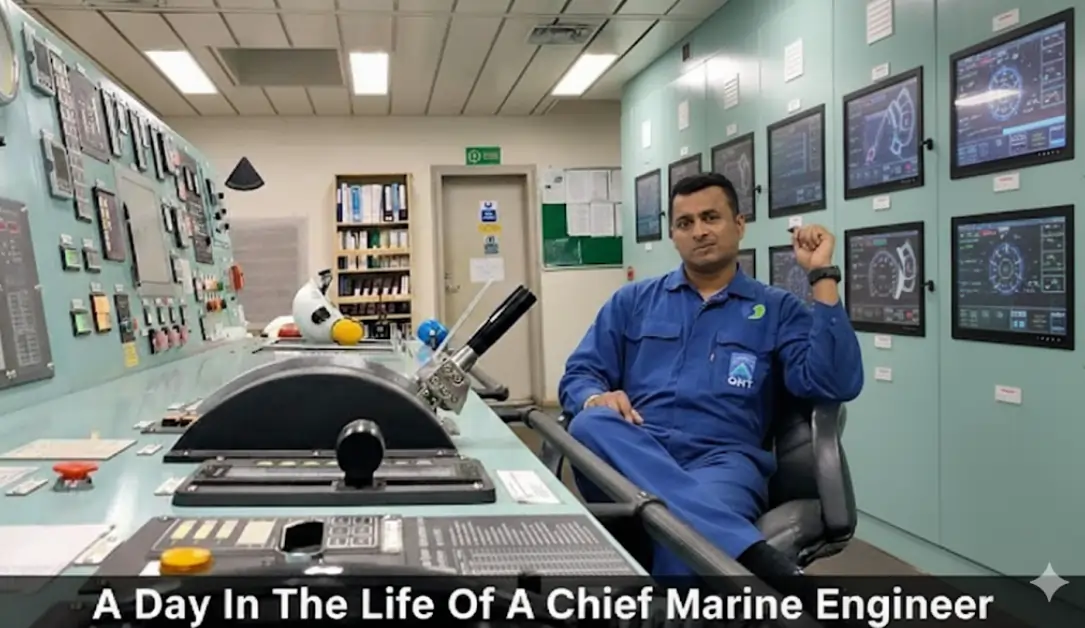
Life at sea looks glamorous from the outside, but behind the calm horizon, one man ensures the ship’s power never falters—the Chief Marine Engineer. This quick-read version takes you through a day in the life of a Chief Marine Engineer, told through a real-time timeline of his duties, responsibilities, and challenges on a running vessel.
6:30 AM – Start of the Day
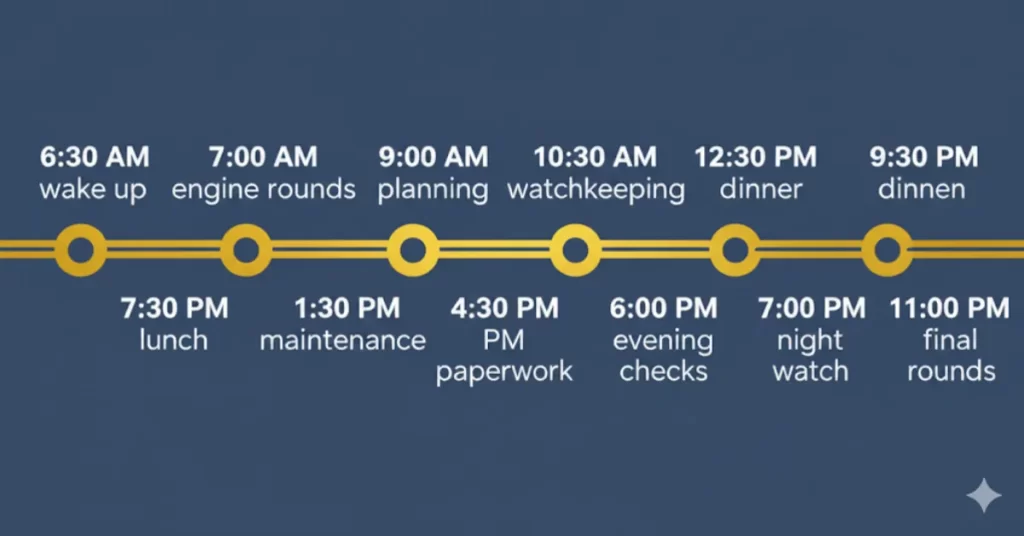
The Chief Marine Engineer wakes early, around 6:30 AM. Mornings begin not with leisure but with preparation: a strong coffee, a mental run-through of overnight reports, and readiness to step into the buzzing heart of the ship—the engine room.
7:00 AM – Morning Rounds
By 7:00 AM, the Chief is in the engine room conducting vital checks: oil pressures, temperatures, auxiliary engines, pumps, and boilers. This daily inspection ensures machinery is running safely and efficiently. For him, these rounds are not just ritual—they’re preventive action against costly breakdowns.
9:00 AM – Work Planning
At 9:00 AM, he chairs the morning toolbox meeting with his engineers. Here, the team reviews planned maintenance, allocates duties, and addresses safety priorities. As team leader, the Chief balances technical supervision with inspiring younger engineers to grow into their roles.
10:30 AM – Watchkeeping Duty
Unlike shore-based engineers, a Chief at sea must also take watchkeeping duties. During this time, he supervises propulsion engines, fuel systems, purifiers, and logs machinery performance into the engine logbook. A watch at sea means vigilance—no blink of an eye can afford a missed alarm.
12:30 PM – Lunch Break
A quick meal in the mess room offers the Chief a chance to laugh with fellow officers. Even brief, these conversations with the Captain and Chief Officer strengthen the teamwork vital for shipboard life.
1:30 PM – Maintenance and Repair Oversight
Afternoons see the heavy lifting: supervising cylinder overhauls, pump repairs, generator inspections, or boiler checks. The Chief ensures everything follows the ship’s planned maintenance system (PMS) and global safety standards. While junior engineers turn wrenches, the Chief provides oversight, judgment, and guidance.
4:00 PM – Paperwork and Communication
By late afternoon, he shifts from tools to paperwork. Reports like daily log summaries, fuel consumption figures, and oil record book entries are updated. He also synchronizes with the Captain, ensuring navigation plans and fuel efficiency strategies align. Shore offices rely on him for accurate technical updates.
6:00 PM – Evening Checks
Another round of equipment checks ensures all machinery remains reliable for nighttime running. Boilers, purifiers, and alarms are revisited. This is about foresight—catching small faults before they grow into crises at sea.
7:30 PM – Dinner & Crew Bonding
Dinner with the crew is often the only relaxed moment of the day. Engineers swap stories, share laughs, and bring cultural flavors into the mess room. But even at dinner, the Chief remains mentally tied to his responsibilities, ready for any midnight call.
9:00 PM – Night Watch
Sometimes, the Chief slots into the night watch rotation. Late-night hours are quieter, but engine vibrations and gauge flickers tell their own story. The Chief quietly ensures the ship makes her way across dark seas, every system humming in tune.
11:00 PM – Final Rounds & Rest
Before sleeping, he takes his last check and hands over watchkeeping details. Only when satisfied does he head to his cabin, aware that even in rest, his responsibility is never off.
What Does a Chief Marine Engineer Really Do?
Summarized, he is:
- Head of all machinery operations on board
- Leader, mentor, and safety guardian for the engine crew
- Key communicator with the Master and company
- Always alert, always responsible
FAQs
Q: What is the salary of a Chief Marine Engineer?
A: On average, $9,000–$15,000 monthly depending on rank seniority, ship type, and employer.
Q: What is the career path after 2nd Engineer?
A: Promotion to Chief Engineer comes after adequate sailing days, advanced courses, and company endorsement of leadership ability.
Q: Do Chief Engineers still keep watches?
A: Yes, especially on running vessels, maneuvering, or when manpower requires. They lead by example and handle critical watchkeeping.
